Why Resin Printers Dominate Miniature Printing
If you’re printing miniatures for Warhammer, D&D, Pathfinder, or any tabletop game, resin is the only serious option. FDM printers can’t match the detail resolution needed for 28-32mm scale figures — you’ll see layer lines on every face, every weapon, every cape fold.
Resin printers work differently. They use UV light to cure liquid resin layer by layer, achieving XY resolutions of 18-25 microns. At that level, facial features look sculpted, not printed. Chain mail looks like chain mail. Sword edges are actually sharp. (For a broader look at resin machines beyond miniatures, see our best resin 3D printers roundup.)
The magic number is 25 microns or less for XY resolution. Below that threshold, your prints rival injection-molded plastic at a fraction of the cost — roughly $0.15-$0.35 per miniature. (Curious about total costs? We break it all down in how much does 3D printing cost.)
Our Top Picks
| Pick | Printer | Best For | XY Resolution | Price |
|---|---|---|---|---|
| Best Overall | Elegoo Saturn 4 Ultra | Quality + speed + features | 18x18um (12K) | ~$300 |
| Best for Detail | Elegoo Mars 5 Ultra | Sharpest minis at any price | 18x18um (9K) | ~$285 |
| Best Budget | Anycubic Photon Mono 4 | Incredible value | 17x17um (10K) | ~$150 |
| Best Large Volume | Phrozen Sonic Mega 8K S | Army-scale batch printing | 43um (8K) | ~$1,300 |
| Best for Beginners | Elegoo Mars 4 Ultra | Easy setup, great results | 23x23um (9K) | ~$200 |
1. Elegoo Saturn 4 Ultra — Best Overall
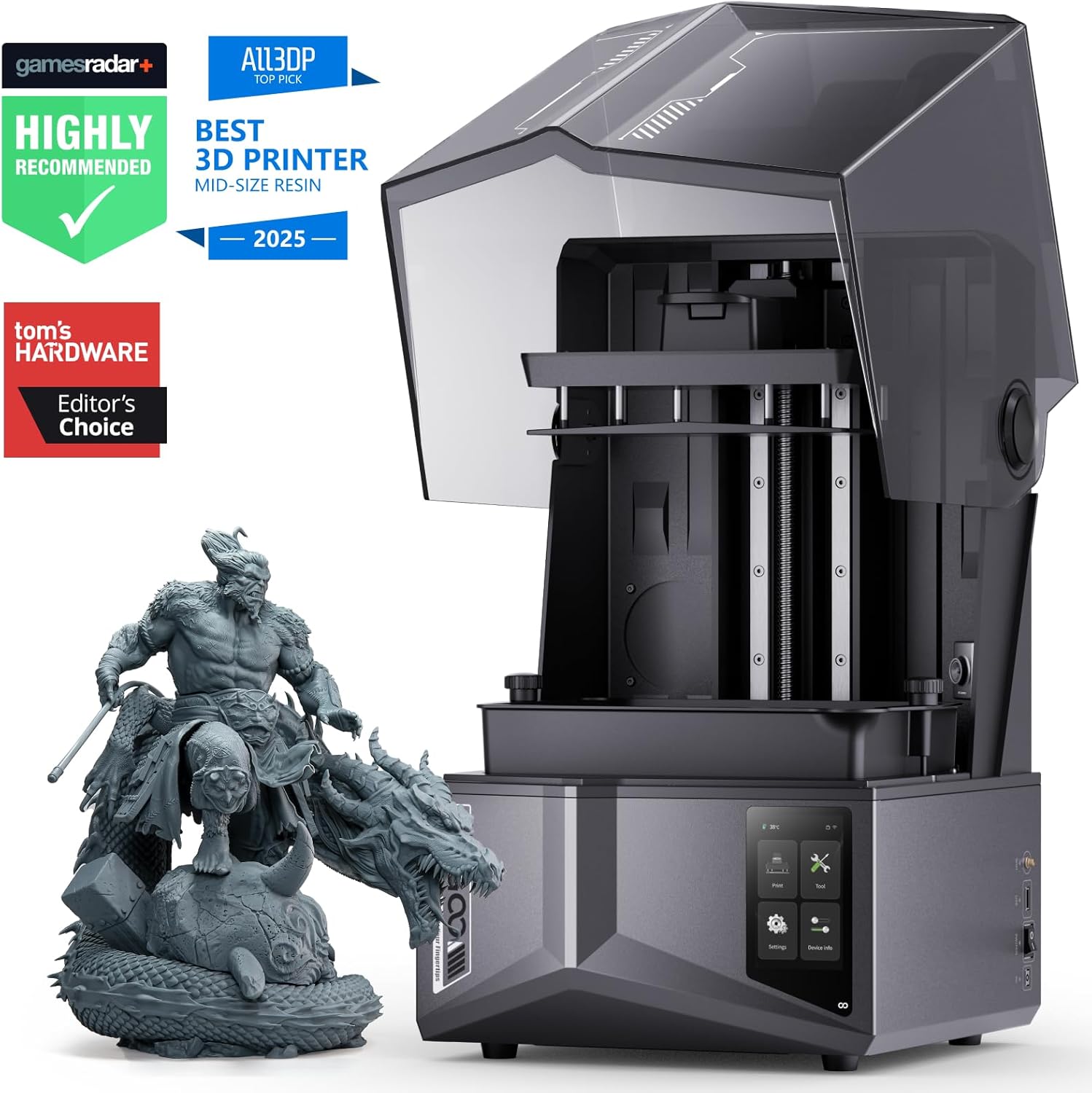
The Saturn 4 Ultra is the printer the tabletop community has rallied around, and for good reason. Its 12K screen delivers 18x18 micron XY resolution across a generous 218.88 x 122.88 x 260mm build volume — that’s enough to print 20+ miniatures in a single batch.
What sets it apart from cheaper options isn’t just resolution (several printers match it). It’s the quality-of-life features: tilt vat release that reduces peel forces (fewer failed prints), integrated air filtration, and a hinged hood that makes loading/unloading resin easy. The build plate has laser-etched texture for reliable adhesion without flexing off prematurely.
Print speed is excellent — up to 150mm/hr in fast mode, though 70-80mm/hr produces the best miniature detail. A full plate of 28mm minis takes about 2-3 hours.
Who it’s for: Miniature painters and tabletop gamers who want the best all-around package — detail, speed, build volume, and reliability in one printer.
2. Elegoo Mars 5 Ultra — Best for Detail
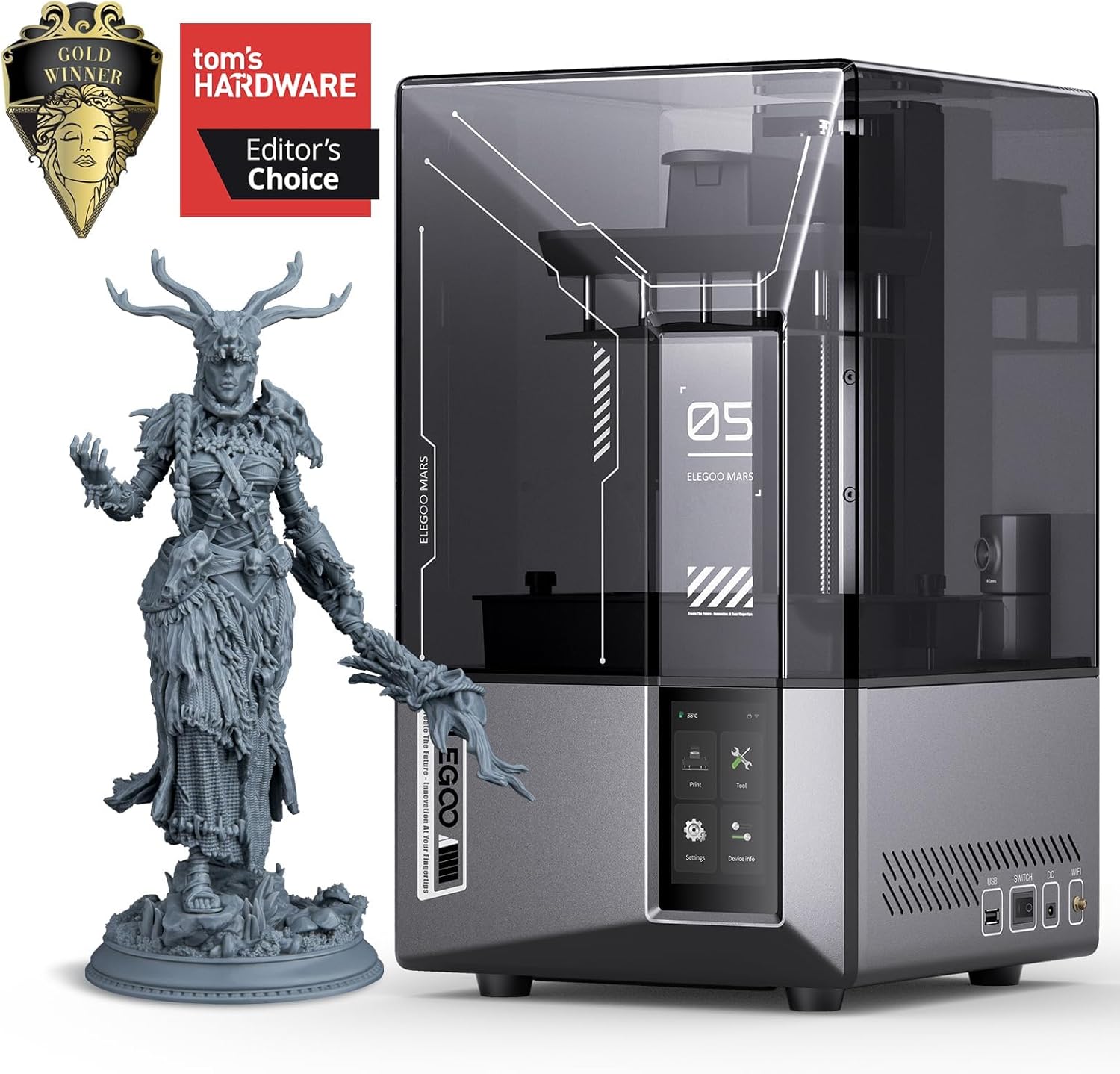
The Mars 5 Ultra takes the same 18x18 micron pixel density and puts it on a smaller, more focused screen. The result is the tightest pixel pitch in its price range — ideal for 28-32mm miniatures where every micron matters.
The build volume (153.36 x 77.76 x 165mm) is smaller than the Saturn, so you’ll fit fewer minis per batch — roughly 6-8 at 28mm scale. But the detail quality is exceptional. Facial expressions, filigree on armor, individual strands of hair — it all resolves cleanly.
At ~$285, it’s the best “miniature-focused” printer for hobbyists who prioritize quality per mini over batch size.
Who it’s for: Detail-obsessed miniature painters who’d rather print fewer minis with perfect detail than crank out large batches.
3. Anycubic Photon Mono 4 — Best Budget
At ~$150, the Photon Mono 4 offers 10K resolution with 17x17 micron XY accuracy. Read that again — sub-20 micron resolution for a hundred and fifty dollars. Two years ago, this spec sheet belonged to $400+ printers.
The build volume is compact (143.4 x 89.6 x 175mm), so batch sizes are limited to about 4-6 minis per print. But for someone starting in miniature printing — especially if you’re not sure you’ll stick with it — this is the obvious entry point. The detail quality is excellent at this price, and you’re not sacrificing much vs. printers costing twice as much.
Who it’s for: Anyone who wants to try miniature printing without a major financial commitment. Also great as a second printer for smaller, detail-focused prints.
4. Phrozen Sonic Mega 8K S — Best Large Volume
If you’re printing armies, terrain sets, or large-scale busts, the Sonic Mega 8K S is the machine. Its build volume of 330 x 185 x 400mm is massive by resin standards — you can fit dozens of miniatures per batch or print a single piece that would take multiple prints on any other machine.
The trade-off is resolution: at 43 microns XY, it’s noticeably softer on small-scale miniatures compared to the 18-micron machines above. For 28mm minis, you’ll see a slight difference up close. For 54mm+ scale, terrain, and display pieces, it’s more than sharp enough.
At ~$1,300, this is a niche machine — it’s for people who know they need the volume and are willing to pay for it.
Who it’s for: Wargamers printing full armies, terrain builders, and display modelers working at 54mm+ scale.
5. Elegoo Mars 4 Ultra — Best for Beginners
The Mars 4 Ultra sits at ~$200 and offers 9K resolution with 23x23 micron XY accuracy. It’s slightly less sharp than the Mars 5 Ultra, but the difference is only noticeable under magnification. For painted miniatures on a tabletop, you won’t see it.
What makes it the beginner pick is the streamlined setup and Elegoo’s ecosystem. The slicer (Chitubox or Lychee) has solid community support, the replacement FEP films and screens are cheap and widely available, and there’s an enormous community producing tested print profiles.
Who it’s for: First-time resin printers who want a forgiving, affordable entry point with strong community support.
What to Look for in a Miniature Printer
XY Resolution Is King
Forget layer height for miniatures — layer height (Z resolution) is virtually identical across all modern resin printers at 10-50 microns. What matters is XY resolution (pixel size). This determines how sharp horizontal details are — facial features, weapon edges, armor texture.
- Under 20um: Exceptional detail, rivals injection molding
- 20-25um: Excellent for 28-32mm scale
- 25-35um: Good for 54mm+ and larger scales
- 35um+: Visible pixelation on small miniatures
Build Volume vs. Detail
Larger screens mean more minis per batch, but pixel size stays the same only if resolution increases proportionally. A 12K screen on a larger plate has the same pixel size as a 9K screen on a smaller plate. Always check the actual micron measurement, not just the “K” resolution number.
Resin Recommendations
For miniatures, we recommend:
- General use: Elegoo ABS-Like 2.0 (~$25/L) — good detail, decent toughness
- Maximum detail: Siraya Tech Simple (~$35/L) — ultra-low viscosity for fine features
- Durable minis: Mix 80% standard + 20% Siraya Tech Tenacious for flex resistance
- Easy cleanup: Water-washable resin — but detail is slightly softer
The Bottom Line
For most miniature hobbyists, the Elegoo Mars 5 Ultra or Anycubic Photon Mono 4 are the smart picks — exceptional detail at reasonable prices. If you need batch volume, step up to the Saturn 4 Ultra. The era of expensive, finicky resin printers is over — these machines produce gallery-quality miniatures at a cost of pennies per model.
Last verified: March 2026. Prices reflect typical US retail.