Two Different Bets in Mid-Range Resin
The Saturn 4 Ultra and Photon Mono M7 are two popular mid-range resin printers in 2026. Both target the prosumer space — better than entry-level, more affordable than industrial.
But they’re built around different philosophies:
- Elegoo Saturn 4 Ultra (~$399) — bets on workflow polish (auto-leveling, intelligent sensors, tilt-release) at 12K (19µm pixel pitch)
- Anycubic Photon Mono M7 (~$269) — bets on raw resolution (14K, ~17µm pixel pitch) at a lower price point, with manual leveling
Which is right depends entirely on what you value.
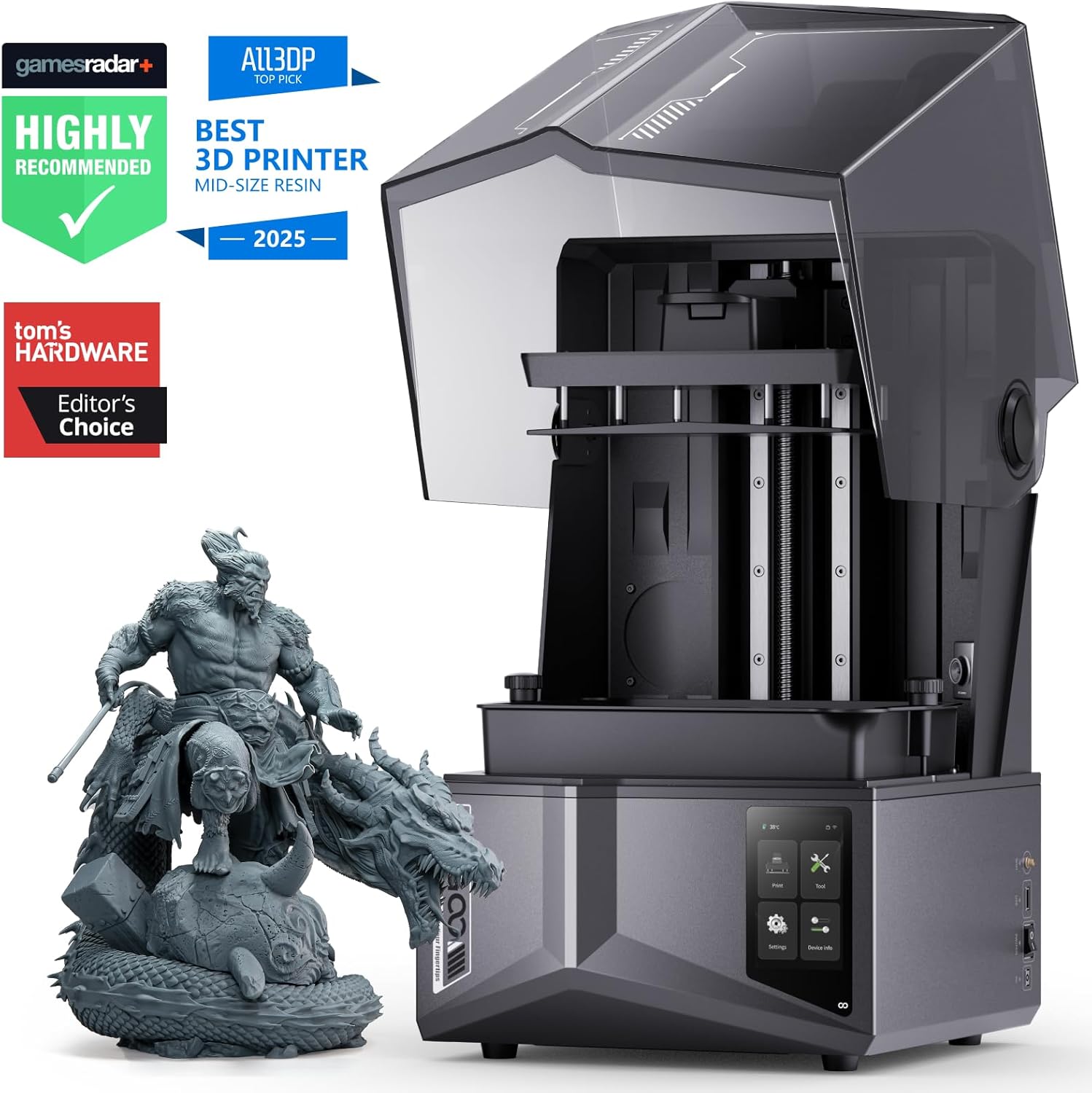
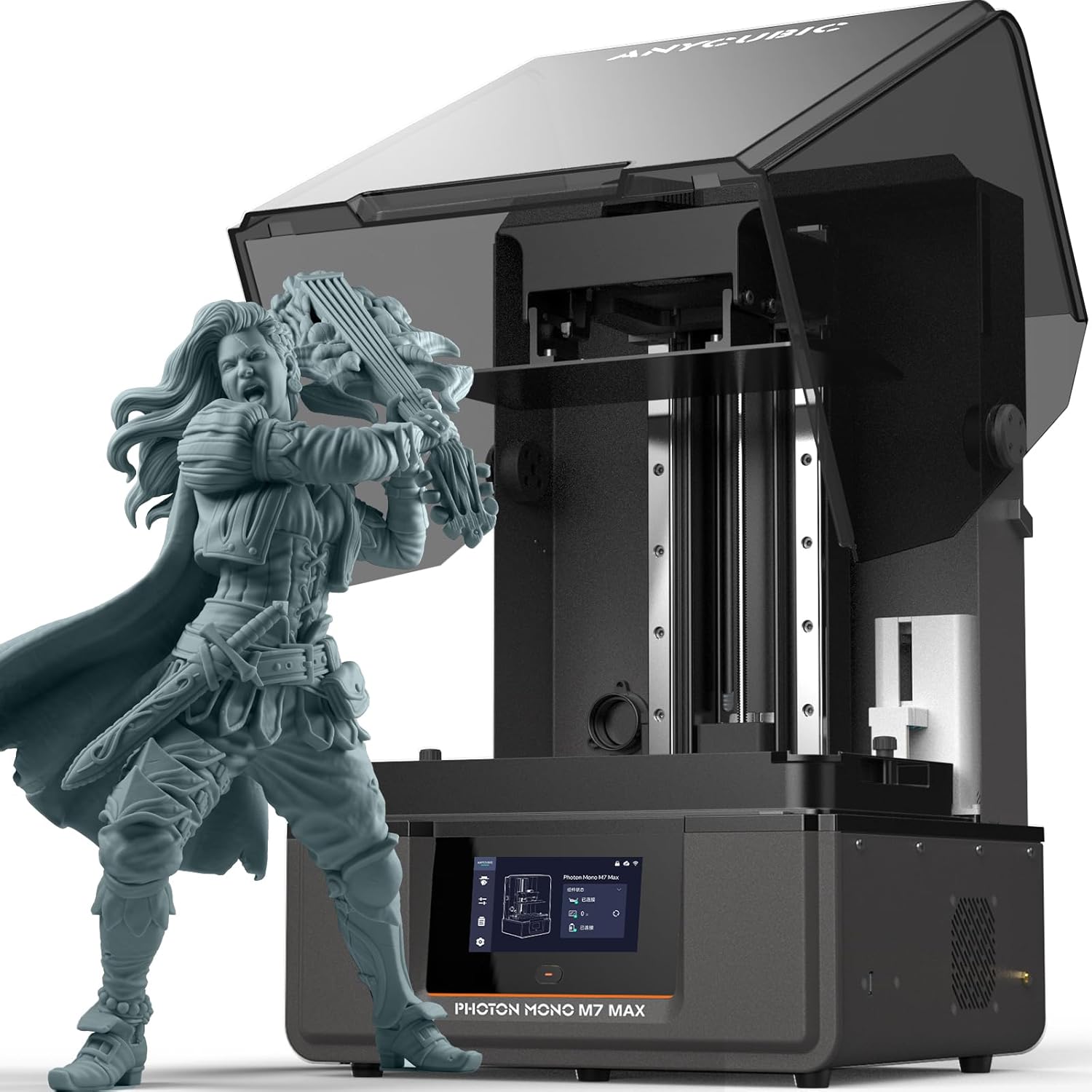
| Spec | Elegoo Saturn 4 Ultra | Anycubic Photon Mono M7 |
|---|---|---|
| Build Volume | 218.88×122.88×220mm | 223.78×126.97×230mm |
| LCD | 10 inch mono | 10.1 inch mono |
| Resolution | 12K (11520 x 5120) | 14K (13312 x 5120) |
| XY Resolution | 19 µm | 17 µm |
| Light Source | COB UV with reflector | Anycubic LighTurbo (matrix LED) |
| Release Film | PFA release film | Improved ACF Film |
| Leveling | Automatic | Manual (4-screw) |
Pixel Pitch: 17µm vs 19µm — Both Excellent
The headline numbers: Saturn delivers 19 × 24µm pixels (non-square); the M7 delivers ~17 × 25µm pixels (also non-square).
For paintable miniature detail, both are below the practical 20µm threshold that matters. The M7 has a slight edge on the X-axis pixel pitch, but the difference is small enough that you’d need a microscope and back-to-back prints to spot it on a finished mini.
In practice:
Saturn 4 Ultra (19µm):
- Faces and facial details on 28mm minis show clearly
- Sword edges and weapon details remain sharp
- Texture work (chainmail, fur, scale) prints crisp
Photon Mono M7 (17µm):
- Marginally sharper detail (visible mostly under magnification)
- Eyes and fine facial features render slightly crisper
- Same paintability as Saturn for typical 28mm minis
For most painters, both are excellent. The M7’s resolution edge matters more for jewelry prototypes, dental models, or display-quality showcase pieces than for tabletop painting.
Build Plate: Nearly Identical
- Saturn 4 Ultra: 218.88 × 122.88 × 220mm (10" screen)
- Photon Mono M7: 223.78 × 126.97 × 230mm (10.1" screen)
These are within 5mm of each other in every dimension. Functionally identical for batch printing miniatures, terrain, or character pieces. Neither is a meaningful win.
If you need significantly bigger plate, look at the Photon Mono M7 Max (13.6") or Saturn 4 Ultra 16K — both step up volume and price.
Auto-Leveling: Saturn Wins
The Saturn 4 Ultra auto-levels. The Photon Mono M7 uses manual 4-screw leveling. In 2026, this feels archaic — most printers under $200 auto-level now.
If you’re new to resin printing, the auto-leveling difference is significant. Manual leveling means:
- Print a leveling test
- Adjust 4 screws until uniform
- Re-test
- Adjust again
This is a 15-30 minute first-time setup, plus periodic re-leveling. Saturn skips all of it.
Intelligent Sensors: Saturn Wins
The Saturn has resin level sensors and tank-tilt detection. The M7 doesn’t. This means:
- Saturn warns you if resin gets low mid-print
- Saturn detects tank wobble that could cause adhesion failures
- M7 just runs and hopes
Real-world impact: fewer failed prints on the Saturn, less resin wasted on aborted long jobs.
Release Mechanism: Saturn’s Tilt Release Wins
- Saturn 4 Ultra: PFA release film + tilt-release mechanism
- Photon Mono M7: Improved ACF film, standard lift-and-peel
The Saturn’s tilt-release is genuinely faster and gentler than traditional lift-and-peel. Less force on each layer = fewer failures, especially on tall thin features. The M7’s ACF film is good, but the lift mechanism still puts more stress on prints.
For dense miniatures with delicate parts, this favors the Saturn. For chunky terrain, either works fine.
Light Source: LighTurbo vs COB UV
- Saturn 4 Ultra: COB UV with reflector
- Photon Mono M7: Anycubic LighTurbo (matrix LED with lens array)
Both deliver excellent exposure uniformity. The LighTurbo system is highly uniform across the M7’s 10.1" panel. Saturn’s COB system is similarly uniform on its 10" plate. Practical print quality difference: near zero.
Auto-Leveling: Saturn Wins
The Saturn 4 Ultra auto-levels. The Photon Mono M7 uses manual 4-screw leveling. In 2026, manual leveling is a meaningful workflow tax — 15-30 minutes for first setup, occasional re-checks afterward. Saturn skips all of it.
For a first resin printer, this is a real point in Saturn’s favor.
Intelligent Sensors: Saturn Wins
The Saturn has resin level sensors and tank-tilt detection. The M7 doesn’t. This means:
- Saturn warns you if resin gets low mid-print
- Saturn detects tank wobble that could cause adhesion failures
- M7 just runs and hopes
Real-world impact: fewer failed prints on the Saturn, less resin wasted on aborted long jobs.
Price: M7 Wins by ~$130
- Saturn 4 Ultra: ~$399 current street price
- Photon Mono M7: ~$269 current street price
This is the M7’s biggest argument. You’re paying ~$130 less for slightly better resolution, in exchange for losing auto-leveling, intelligent sensors, and the tilt-release mechanism.
If you’re disciplined about manual leveling and don’t mind missing the QoL features, that $130 buys a lot of resin.
The Buy Recommendation
Buy the Saturn 4 Ultra (~$399) if:
- You’re new to resin printing (auto-everything is huge)
- You want fewer failed prints (intelligent sensors + tilt-release)
- Workflow polish matters more than saving $130
- Detail painting is your priority and you don’t need the absolute sharpest pixel pitch
Buy the Photon Mono M7 (~$269) if:
- You’ve used a resin printer before and don’t mind manual leveling
- You want maximum resolution per dollar
- You’re cost-conscious and willing to sacrifice some workflow polish
- Jewelry, dental, or showcase models where the 17µm matters
For most first-time resin buyers, the Saturn 4 Ultra is the better tool. For experienced resin printers on a budget, the M7 is the value pick.
For a smaller-plate alternative, see Saturn 4 Ultra vs Mars 5 Ultra . For broader resin recommendations, see Best Resin 3D Printer or Best 3D Printer for Miniatures .